
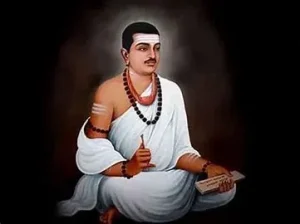
‘KaayakavE Kailaasa’ loses some of its meaning when translated as ‘Work is Worship.’ One of the biggest gifts of Basavanna and Shiva Sharanas to the world is the concept of kaayakavE Kailaasa (Kannada: ಕಾಯಕವೇ ಕೈಲಾಸ). The two words that make up this phrase have a deep meaning by themselves, while the sum total is much higher than the individual parts. The word kaayaka (ಕಾಯಕ), which derives from the root word kaaya (ಕಾಯ) for body, means hard work (done by exerting the body) that is meaningful, truthful, and beneficial to society. This is clearly different from kelasa (ಕೆಲಸ), which translates to any work and hence may or may not always be beneficial to society. Stealing can be regarded as “work” (if somebody pays you to do so), but it cannot be “kaayaka” as it is bad for society. The second word kailaasa (ಕೈಲಾಸ) literally refers to Mount Kailash (in what is now Tibet) that is considered to be the abode of Lord Shiva and a place of eternal bliss. Figuratively, it means a place where God resides.
By reading history and from the literature of the 12th century, we get an impression that the Indian society was segregated into tight hierarchical caste blocks. Your status in society and what you should do for a living was determined solely by what your parents did, rather than on your own skill level and current interest. Farmer’s families did farming, warrior’s families should be engaged in protecting the society (military), traders should do business, and the priestly class took up education and offering of prayers to God. Since there was little necessity for a farmer to get formal education, they continued to be pretty much illiterate for generations. Kannada was the spoken language of the masses, but since the prayers offered to God by the priests were in Sanskrit, common people rarely (or never) understood the import of those prayers. There was also a high level of stagnation in society because the people at the lower strata, in particular, felt that caste-based distinction was not a fair deal for them. Upward movement was near impossible.
Shiva Sharanas strived hard to reform this society by creating a direct path from a human being to God, without having to go through a third person. Sharanas said we should engage in those activities and professions that help society (kaayaka). Hence, not all work can mean worship. Inspired by this thought, Sharanas even placed their kaayaka higher than God, meaning mere worship of God does not really help the bottom line. What matters is your conduct, your deeds, and your contribution to society every day.
Thanks to the bold and selfless efforts of Sharanas, the region that is now Karnataka, parts of Maharashtra, and Andhra Pradesh underwent a great social revolution. All sections of society got a new hope in their current lives. People went back to do their jobs with dignity, and the neighborhoods started buzzing with activity. People were empowered to do their duty rather than being forced. Isn’t that a great way to a healthy economy as there is more productivity, active participation, camaraderie, and lesser cheating?
Thank you, Rajesh Goudar, Santa Clara, California (rajeshgoudar@yahoo.com)